 Blog
Blog
Stop the Forgers: How to Outsmart Document Fraud in an AI-Driven World
In a world where AI technology is reshaping how people interact, create, and secure data, the stakes for authenticity and trust have never been higher. With the advent of deep fakes and the ease of document manipulation, it’s crucial for businesses to partner with experts who understand not only how to detect these forgeries but also how to anticipate the evolving strategies of fraudsters. Building resilient systems that combine human expertise with automated tools is essential to protect reputation, reduce financial loss, and maintain regulatory compliance.
Why document fraud is a growing threat and what’s at risk
Document fraud has evolved from crude photocopy alterations to sophisticated, digitally engineered forgeries that can bypass traditional inspection. The increase in remote transactions, digital onboarding, and globalized identity verification has expanded the attack surface for criminals. Fraudsters now exploit accessible AI tools to create near-perfect reproductions of identity documents, certificates, contracts, and legal forms. This surge in technical capability makes forgery easier and faster, while the consequences grow more severe.
Organizations face multiple risks when document integrity is compromised. Financial institutions can experience direct monetary loss, chargebacks, and regulatory fines. Employers and educational institutions are exposed to reputational damage when false qualifications slip through hiring or admission processes. Even private transactions can be derailed by altered contracts or tampered legal documents. Beyond immediate harm, successful fraud undermines trust across digital ecosystems, making customers and partners wary of legitimate processes.
Regulatory landscapes are responding with stricter Know Your Customer (KYC), Anti-Money Laundering (AML), and identity verification mandates, increasing pressure on businesses to demonstrate robust defenses. Organizations that fail to modernize their verification pipelines risk not only fraud-related losses but also compliance penalties and erosion of consumer confidence. The most effective defenses address both the technical sophistication of modern forgeries and the systemic vulnerabilities that allow them to propagate—combining proactive monitoring, secure document design, and layered verification strategies.
Technologies and techniques behind modern detection
Modern document fraud detection relies on a layered approach leveraging machine learning, image forensics, and secure cryptographic methods. Optical Character Recognition (OCR) combined with natural language processing verifies textual consistency, format anomalies, and semantic incongruities that often signal manipulation. Image analysis algorithms examine texture, edge artifacts, and compression signatures to reveal splicing, cloning, or generative model artifacts introduced by AI-powered forgeries.
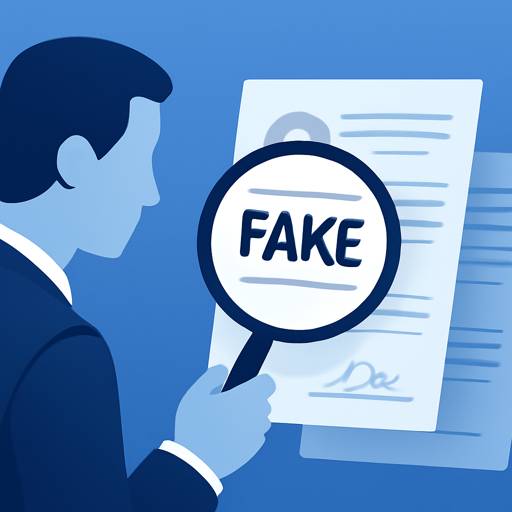
Forensic features such as microscopic watermark analysis, ink differentiation, and substrate inspection remain critical for physical document validation, while digital signatures and public-key cryptography add verifiable authenticity to electronic files. Emerging methods like blockchain anchoring create immutable time-stamped records of document versions, making post-facto alteration easier to detect. Biometric liveness checks and face-document matching link an individual’s presentation to the claimed identity, reducing the risk of synthetic identity use.
Advanced systems apply anomaly detection across transactional patterns and document provenance. Machine learning models trained on large corpora of legitimate and fraudulent examples can identify subtle deviations in layout, font usage, and metadata that elude human inspectors. Continuous learning pipelines allow models to adapt to new tampering techniques, while explainability tools help analysts interpret why a document was flagged. Combining automated scoring with human review optimizes accuracy—automation handles scale and speed, while experts validate edge cases and refine detection rules.
Case studies, implementation best practices, and real-world examples
A multinational bank reduced onboarding fraud by integrating multi-modal checks: automated OCR, face-matching, and manual review for high-risk profiles. After implementing adaptive thresholds informed by historical fraud patterns, false acceptance rates dropped significantly while customer friction remained low. This highlights the importance of calibrated risk-scoring and escalation pathways that preserve user experience without sacrificing security.
In another instance, a university discovered an organized ring submitting falsified diplomas created with generative tools. By introducing forensic watermark verification and cross-referencing credential metadata against issuing registries, the institution prevented further admissions fraud and assisted authorities in tracing the source. This example demonstrates how verifiable issuance records and inter-institution collaboration strengthen overall defenses.
Manufacturing and logistics companies have embraced secure document lifecycle practices for bills of lading and certificates of origin, using cryptographic signatures and tamper-evident digital envelopes. These measures reduced trade fraud and disputes by ensuring recipients could verify authenticity independently. Public sector agencies increasingly require certified issuance channels and machine-readable security features to combat identity document cloning and ghost applicants.
Implementations succeed when organizations combine technology, process, and people. Start with a risk-based assessment to identify the most vulnerable document types and high-impact fraud scenarios. Deploy layered controls—secure document design, automated detection models, and human oversight—and ensure continuous monitoring and incident response playbooks are in place. Training frontline staff to recognize social engineering and anomaly signals complements technical controls. For organizations seeking specialized capability, partnering with suppliers that provide end-to-end document fraud detection solutions and integration support can accelerate deployment and improve resilience against evolving threats.

Raised in São Paulo’s graffiti alleys and currently stationed in Tokyo as an indie game translator, Yara writes about street art, bossa nova, anime economics, and zero-waste kitchens. She collects retro consoles and makes a mean feijoada.